A year after I wrote A Language of Water, and months after it went out into the world, I found a flaw in it.
Not a typo. Those I can forgive as they slip through the tightest net, and a reader's eye mends them almost before it registers them. This was something else. A seam. A place where the story said the same hard thing twice, and another where I let the book name a wound before it had earned the right to name it. Small, but structural. The kind of thing you feel more than you see.
But no one caught it. Not the editors. Not the proofreaders. Not even me. Not through the first draft, or the second, or the read-aloud, or the proof pass, or the dozen times I've opened the book since just to sit with a page. It went out clean, or clean enough. It's been reviewed and shelved and read. And in all that time, not one person has said a word. No review, no email, no raised eyebrow. For all I know, I am the only living person who has ever seen it.
And I could not leave it alone.
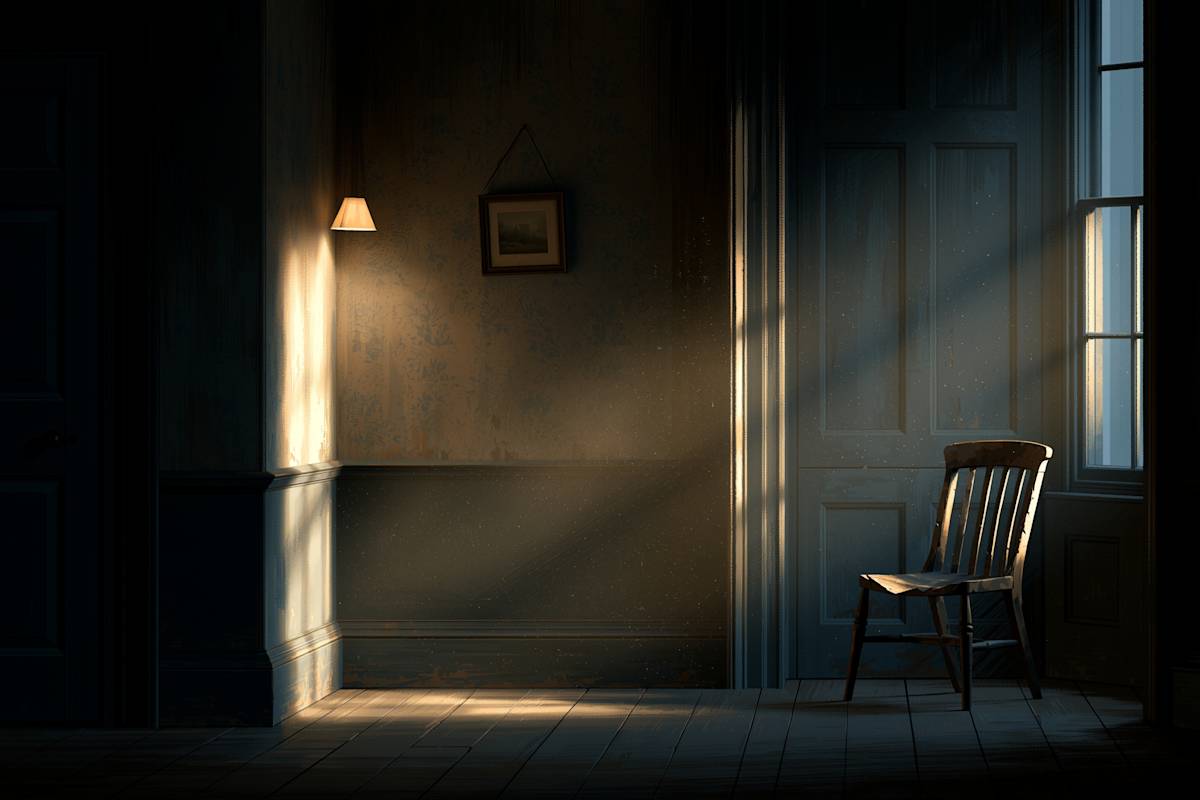
It's a picture hung a half-inch crooked in a room only I ever walk into. Everyone tells me it looks fine. It does look fine. But I know it's crooked, and knowing is a kind of noise I can't turn down. I tried to set it back on the shelf and walk away. It kept calling me back.
So I went back in. I found the doubled beat and let it happen once. I found the line that spoke too soon and taught it to wait. I read the pages around them until the seam disappeared and until I couldn't find the place I'd mended. Then I sent the corrected file back out. The e-books will update quietly, on their own; the next copies printed will carry the truer version. If you already own it, the fix will simply be there one day, and you'll never know a thing had changed.
Which is the part I keep turning over.
No one will notice. No one was ever going to. There was no cost to leaving it and no applause for fixing it. By every practical measure, it did not matter.
But I don't only write for you. I write for me, too. That's an unfashionable thing to admit. I know we're supposed to say the reader is everything, and the reader is a great deal. But the reason I do this at all is that I'm trying to become something: a better listener, a more honest maker, a storyteller who can be trusted with the hard scenes because he sweats the small ones. You don't get there by letting the crooked picture hang. You get there by going back, again and again, willing to have been wrong.
That willingness is most of the job, I've come to think. Nearly everything I've learned about writing about people comes down to being willing to be wrong about what I was sure I'd gotten right, and then doing the work of getting it a little less wrong.
The book is truer now. You may never see the difference.
I will.
— Michael
July 14, 2026
The Thing No One Noticed